Back
Balgach, Schweiz
Werkhof Balgach
| Commissioner | Political Municipality of Balgach |
| Competition | Tender procedure |
| Planning / Construction | Planning: November 2024, construction loan vote: September 2025 |
| Services provided by IB |
|
| Surface area | 1'900 m2 |
| Construction volume | 8'500 m3 |
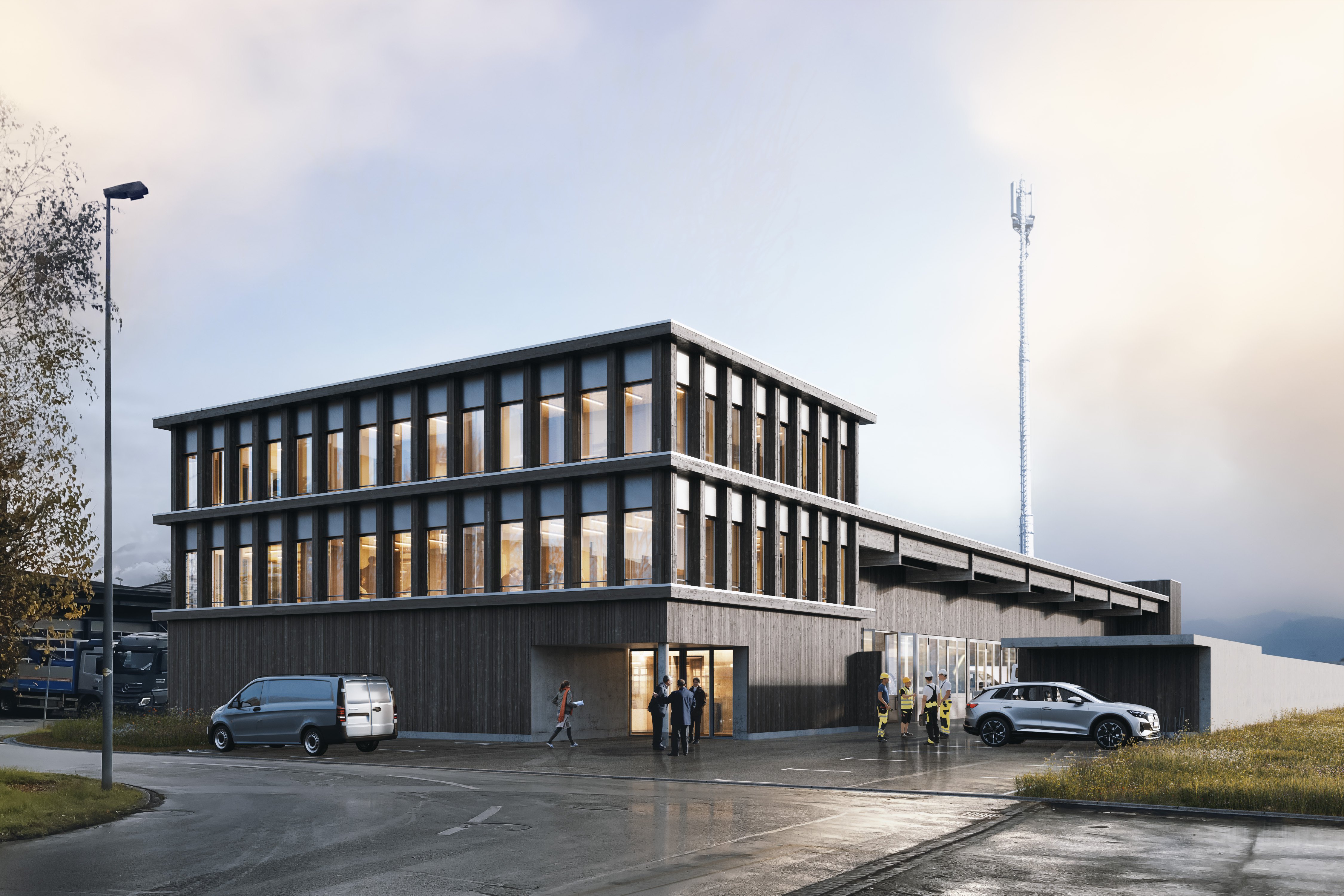
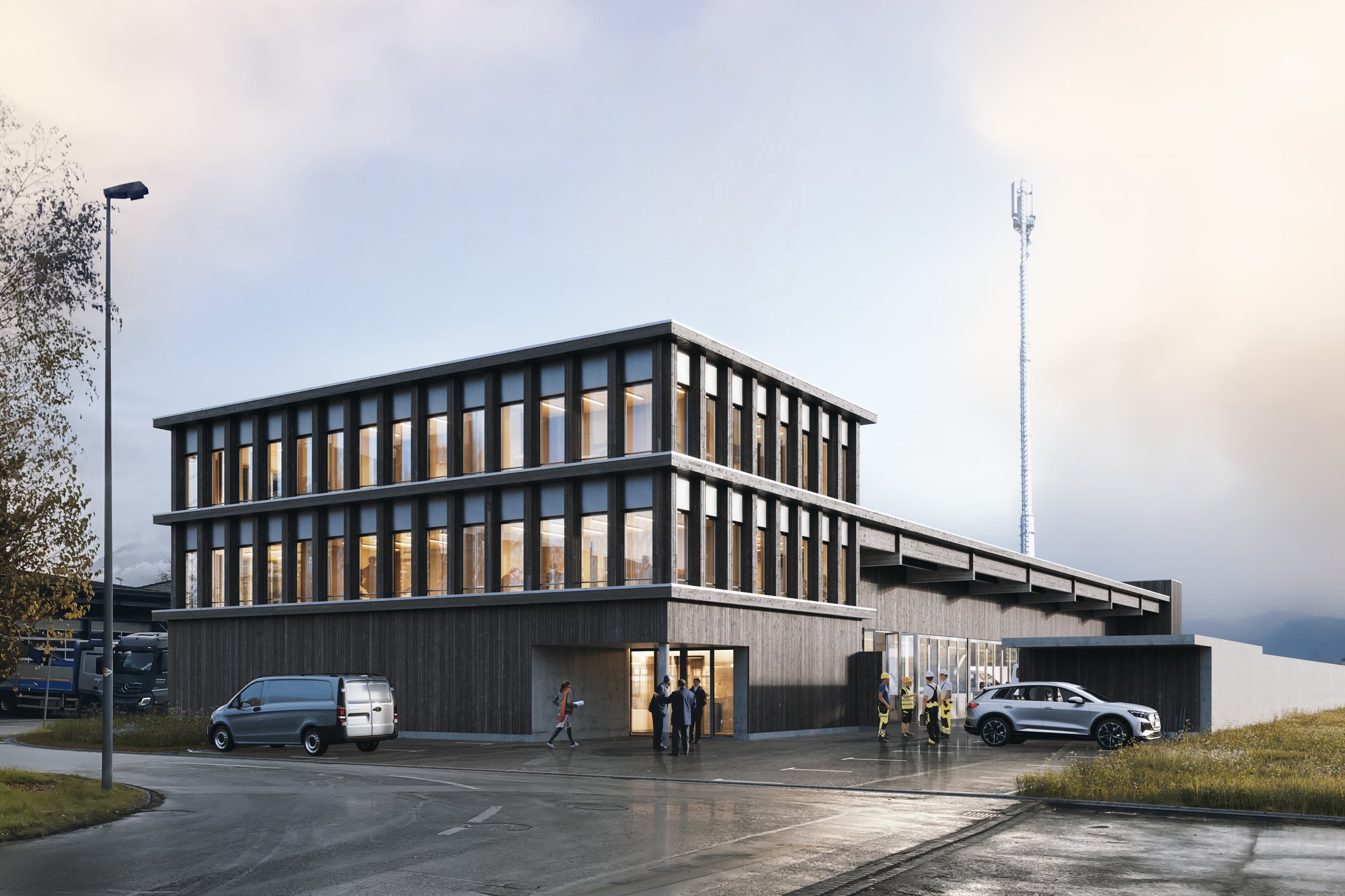
With the construction of the new Balgach Werkhof, a single, centralized location is being created that brings all functions together under one roof. The current operations center in the municipality of Balgach (Canton of St. Gallen) is spread across four separate sites, making the daily organization of vehicles, equipment, and materials considerably more difficult. In addition, employees currently lack adequate staff facilities.
The new operations center will serve as a forward‑looking hub for Balgach—an environment that provides modern working conditions while clearly demonstrating a commitment to responsible, sustainable construction. The architecture reflects the building’s purpose: robust, contemporary, and environmentally conscious. IB is responsible for the architectural design as well as overall project management.
Site and Access
Located in the “Wegen” industrial zone, the rectangular site offers ideal conditions for an infrastructure facility. The new operations center will stand out as a visible public building within the industrial surroundings. Its recessed placement creates a generous courtyard facing west.
Access to the site is provided from the north, where parking for employees and visitors is located, along with a covered shelter for bicycles and mopeds. The northern, eastern, and southern site boundaries are enhanced with landscaped green areas.
Sustainable Timber Construction
The selected materials and the building’s clear, three‑story form give it a light and balanced appearance. A thoughtfully designed layout supports intuitive navigation and efficient workflows.
The facility is being constructed primarily using sustainable timber. Only the load‑bearing elements on the ground floor and the vertical circulation cores are built using solid construction. The above‑ground floor slabs are designed as dowel‑laminated timber decks, meeting fire protection and acoustic requirements. The structural framework of the hall roof remains exposed inside, giving the space a strong architectural character. It also supports the distinctive three‑meter cantilevered canopy.
Program and Spatial Organization
The building is composed of two clearly defined volumes. The southern volume contains the workshops, a storage hall for large vehicles, and a wash bay on the ground floor. Above it sits a recessed upper floor offering additional storage space. All rooms are easily accessible and benefit from generous natural daylight.
The northern volume accommodates staff and office spaces across two floors. The clear organizational structure ensures smooth and efficient operations. The design intentionally eliminates the need for a basement.
Energy Strategy
From a technical standpoint, the new facility adopts a low‑tech strategy—minimizing mechanical systems and maximizing the use of natural energy sources. Ventilation is provided primarily through natural airflow, while heating is supplied via a geothermal heat pump system. A large rooftop photovoltaic array generates up to 115 kilowatts of electricity, supplying power not only to the building but also to the planned on‑site EV charging stations.
