Zurück
Schaffhausen, Switzerland
Spital-Neubau Kantonsspital Schaffhausen
| Programm |
Das neue Spital verfügt über 154 Betten, überwiegend in Zwei-Bett-Zimmern, sowie zehn IPS Plätze. Für die Diagnostik stehen zwei MRT, zwei CT und zwei Röntgengeräte bereit. Eine zentrale Einheit sorgt für die sterile Aufbereitung von Instrumenten. Der Operationsbereich umfasst fünf OP-Säle. Zusätzlich gibt es eine Angiographie-Einheit. Das Gebäude bietet Schutzräume, ein Parkhaus mit 444 Stellplätzen sowie Fahrradabstellmöglichkeiten. Die Energieversorgung erfolgt über eine Energiezentrale für Contractor. |
| Auslobende | Kantonsspital Schaffhausen |
| Wettbewerb | 2017 |
| Planung / Ausführung | bis 2030 |
| Leistung IB |
|
| Architektur | Bollhalder Walser Architektur |
| Architektur Planung | Bollhalder Walser Architektur | Itten+Brechbühl AG |
| Architektur Ausführung | Itten+Brechbühl AG |
| Geschossfläche | 27'550 m2 |
| Bauvolumen | 133'730 m3 |
Schaffhausen Cantonal Hospital has long been a cornerstone of medical care in the region. To bring its infrastructure in line with today’s standards for modern acute care—functionally, efficiently, and with patient comfort in mind—the hospital is undergoing a major transformation. Most of the current buildings date from the 1950s and 1970s, prompting the decision to move forward with a comprehensive redevelopment. A design competition launched to shape this next chapter led to the selection of the winning project, Canotila, created by Bollhalder Walser Architektur AG. Itten+Brechbühl (IB) is overseeing general planning and delivering architectural execution.
Compact Design, Intuitive Circulation
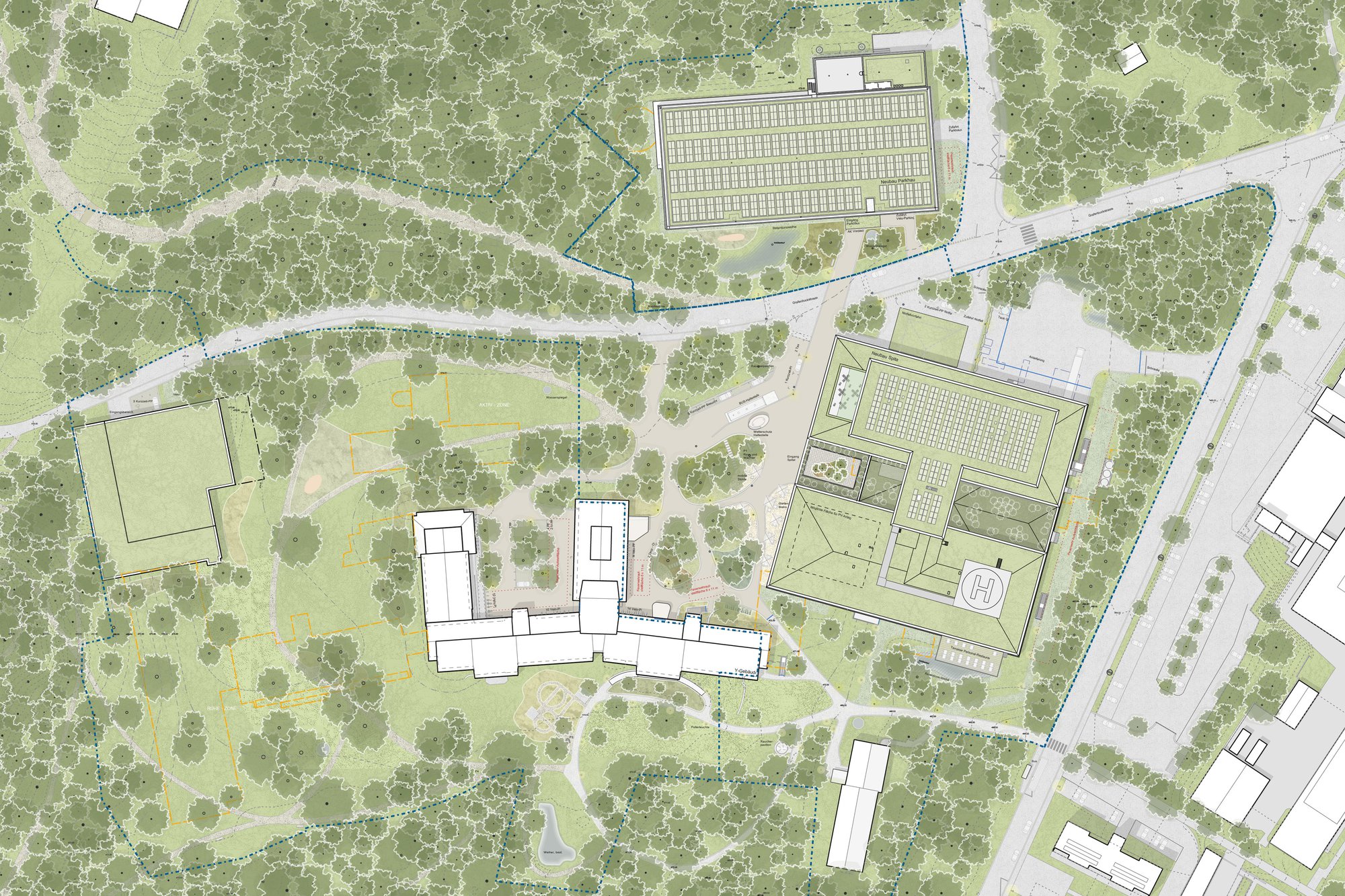
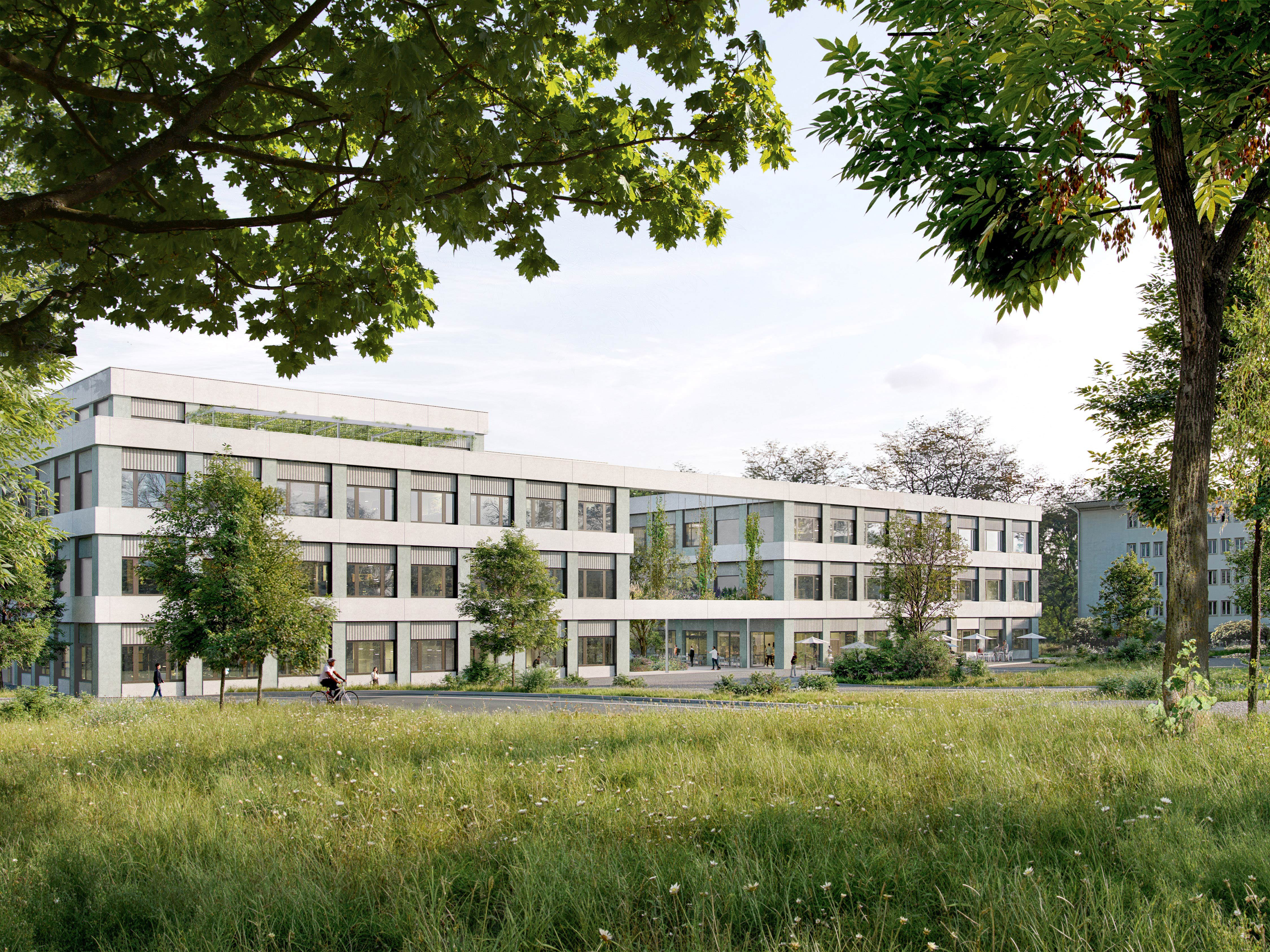
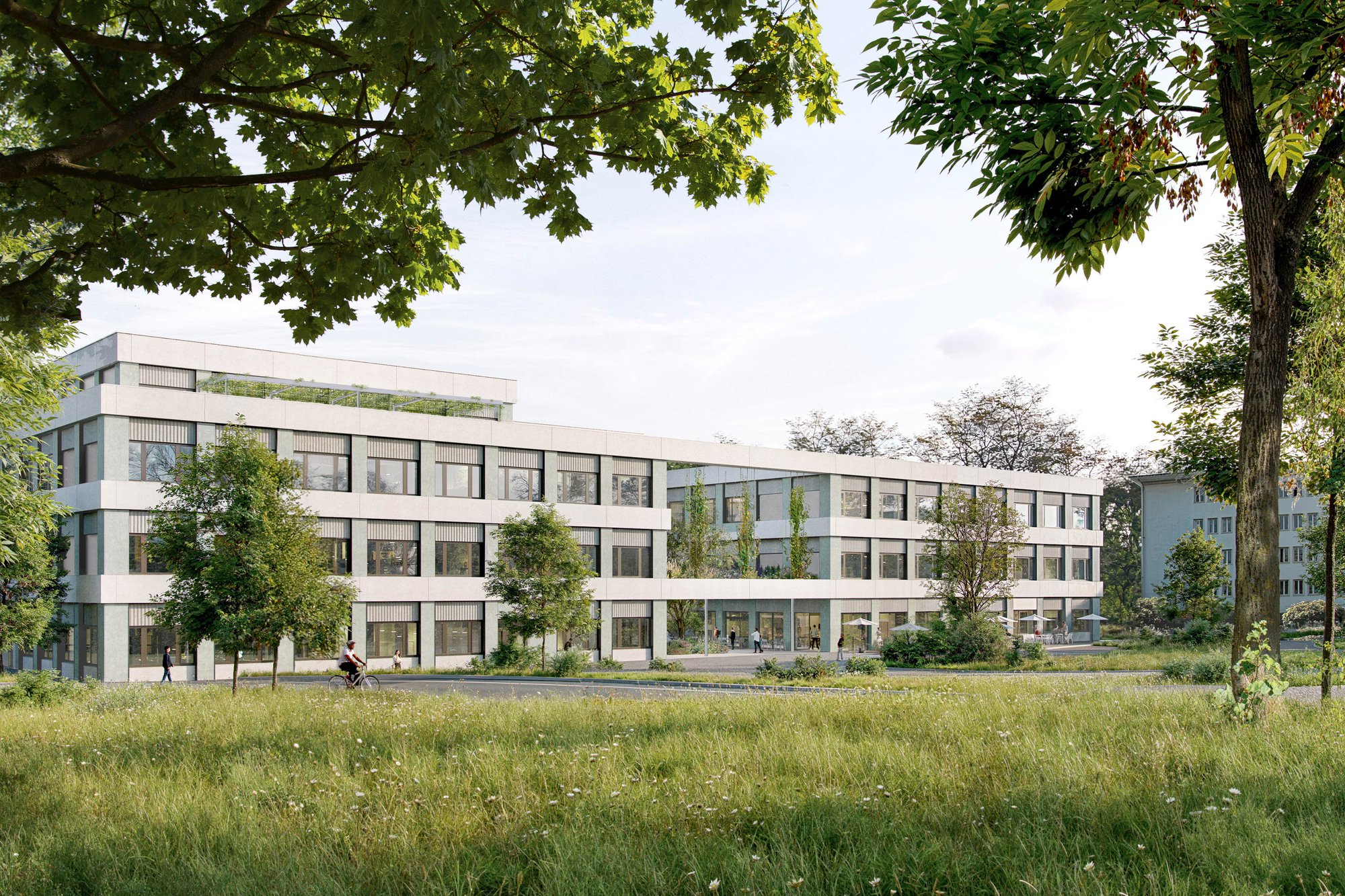
The new facility centers on a compact structure with four above-ground floors and two basement levels. A centrally positioned circulation axis simplifies orientation and shortens travel distances. Visitors and patients approach the building through a landscaped courtyard, allowing them to move through a natural setting as they enter. This green forecourt creates a seamless transition from landscape to architecture.
A Welcoming Core and Smart Layout
At the core of the new building is a spacious entrance hall with a café and bistro, designed to welcome guests with a sense of warmth and openness. From this central hub, the building’s layout unfolds around the principle of “the doctor comes to the patient.” Highly equipped medical areas are concentrated on the north side, while medium-equipped areas lie to the south. Diagnostic and examination zones are organized across specialties on the ground floor, with hospital operations distributed across the upper and lower levels.
Blending Architecture and Landscape
The new building facility is designed to harmonize with its surroundings and serve as the gateway to the projected future healthcare campus. Outdoor spaces feature wooded elements and island-like green zones that connect the building to nature. Emergency access and deliveries are routed efficiently along the northern side, screened from the street by dense planting.
A Strategic Leap Forward
By submitting the building application in September 2025, the hospital took a decisive step toward securing long-term, future-ready care for the region.